by
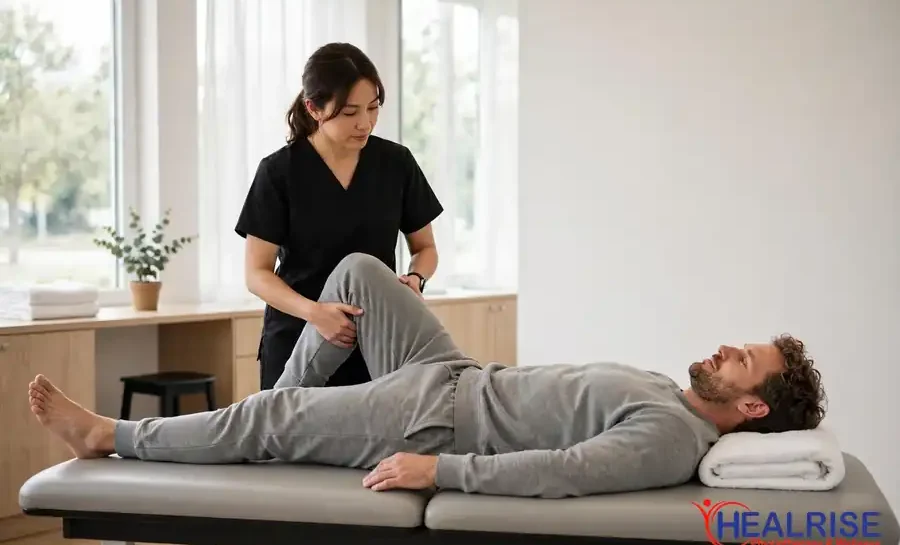
Hip pain can turn simple things into hard work. Getting out of a chair, climbing stairs, or walking to the mailbox can hurt, and you may start avoiding the activities you enjoy. If you are looking for hip pain physiotherapy in Morinville, you are in the right place. At Healrise, we help people ease hip pain, rebuild strength, and move with confidence again.
Hip pain has many causes, and the right treatment depends on the cause. This guide explains those causes in plain words, what to expect from physiotherapy, simple habits that help at home, and the warning signs that need a prompt check.
Table of Contents
Common Causes of Hip Pain
Not all hip pain comes from the hip joint itself. Here are the causes we see most often:
Outer hip tendon pain. The tendons on the outside of the hip can get irritated from overuse, weak hip muscles, or a sudden jump in walking, running, or stairs. This is called gluteal tendinopathy. It hurts most on the outer hip when you lie on that side, climb stairs, or sit with crossed legs.
Hip arthritis. As the cartilage inside the hip joint wears down, the joint gets stiff and sore. Arthritis pain is often felt deep in the groin or front of the thigh, worst in the morning or after sitting a long time, easing a little once you get moving.
Muscle strain. A sudden stretch, a slip, or a new workout can strain the hip or groin muscles. The pain comes on fast, feels sharp at first, and hurts most when you move the leg a certain way.
Pain referred from the back. Sometimes the real problem sits in the lower back, and the pain shows up in the hip, buttock, or thigh. That is why a good assessment always checks the back too.
Typical Symptoms of Hip Pain
Hip pain feels different depending on the cause, but people often describe:
- Pain on the outer hip or in the groin
- Stiffness in the hip, especially in the morning or after sitting
- Pain when lying on the painful side at night
- Limping, or a feeling that the leg gives way
- Pain when climbing stairs, getting out of a car, or putting on socks
- An ache that spreads into the buttock or down the front of the thigh
If your pain matches this list, hip pain physiotherapy in Morinville can usually help, starting with finding which cause fits your story.
What Hip Pain Physiotherapy in Morinville Checks at Your First Assessment
Your first visit at Healrise is a full assessment, not a quick look. Your physiotherapist will ask when the pain started, what makes it worse, and what it stops you doing, then check:
- How far your hip moves in each direction, and where it hurts
- The strength of the muscles around your hip, especially the glutes
- How you walk, stand on one leg, and climb a step
- Your lower back, because back problems often refer pain to the hip
- Your balance and the way your pelvis moves when you walk
This tells us whether your pain is a tendon problem, arthritis, a strain, or referred from the back, and which exercises will help. You will leave with a clear plan and home program, not guesswork.
Hip Pain Physiotherapy in Morinville: What Treatment Looks Like
Treatment is rarely one single thing. It is a plan built around your cause, your goals, and your daily life:
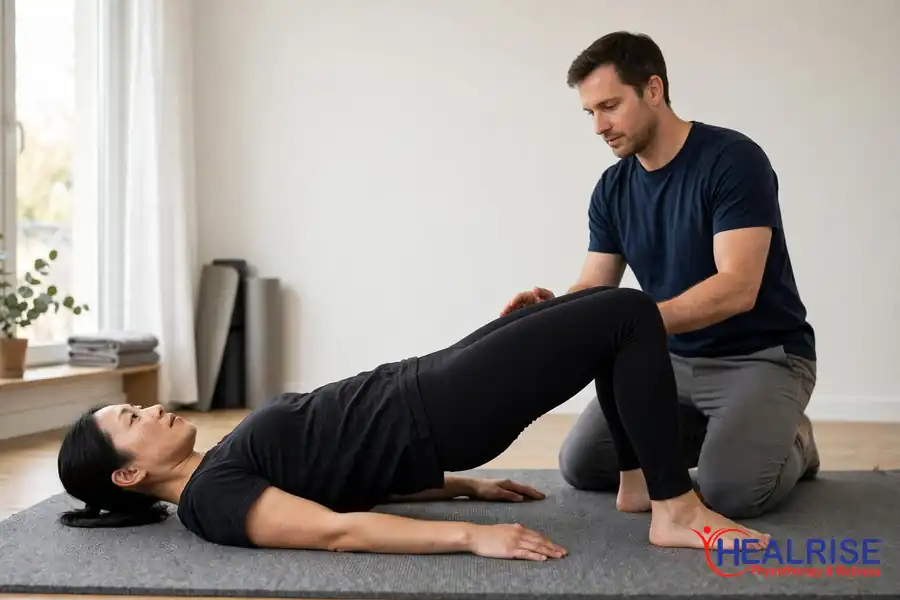
Progressive strengthening. Weak hip muscles drive much hip pain. We build strength step by step, starting with gentle moves like glute bridges and side lying leg raises, then progressing as your hip copes. Strong glutes take load off sore tendons and support an arthritic joint.
Load management. This means finding the right amount of activity: enough to build strength, but not so much that you flare up. We help you adjust walking, stairs, or gym work so your hip can settle and improve.
Manual therapy. Hands on treatment eases stiffness, calms sore muscles, and improves hip movement. Our manual therapy service is combined with exercise for the best result.
Activity changes. Small changes make a big difference: not sitting with crossed legs, using a higher chair, or changing how you get in and out of the car. We look at your real routine.
Physiotherapy works best when it is steady and progressive. Quick fixes and aggressive stretching often make tendon pain worse, so we progress at a pace your hip can handle. MyHealth Alberta publishes hip arthritis exercises that match our gentle strengthening approach.
Simple Home Habits That Help Your Hip
What you do between visits matters as much as the visits. These habits help most people with hip pain:
Sleep on your good side. If lying on the sore hip hurts, sleep on the other side with a pillow between your knees. This keeps your pelvis level and takes pressure off the sore tendons.
Pace your activity. Break long walks into shorter ones, and build distance slowly. A flare the day after a big effort means the load was too much, not that you should stop.
Avoid the painful positions. Sitting low, crossing your legs, and standing on one leg a long time can irritate outer hip tendons. Sit higher, keep your feet flat, and change position often.
Move a little, often. Gentle, frequent movement beats one big session. Short walks through the day keep the hip moving and the muscles working.

How Long Does Hip Pain Take to Improve?
It depends on the cause. A muscle strain often settles in 2 to 6 weeks with the right care. Outer hip tendon pain usually needs 6 to 12 weeks of steady strengthening, because tendons change slowly. Arthritis does not go away, but many people feel noticeably better in 4 to 6 weeks as their muscles get stronger. The common thread is consistency: hip pain physiotherapy in Morinville works best when you follow the home program between visits.
Warning Signs to Get Checked Promptly
Most hip pain is not dangerous, but some signs need a prompt check. Contact your doctor or come in right away if you have:
- Hip pain after a fall or injury, especially if you cannot bear weight
- Fever, redness, or swelling around the hip
- Unexplained weight loss along with hip pain
- Groin pain with a limp that is getting worse
- Pain at night that does not ease no matter how you lie
If any of these apply to you, do not wait it out. Early checks protect your hip and your health.
Hip Pain Care at Healrise Physiotherapy and Wellness
If you want hip pain physiotherapy in Morinville close to home, Healrise Physiotherapy and Wellness is here to help. Lead physiotherapist Dipak Chunara and our team assess your hip properly, explain your problem in plain words, and build a plan around your life and goals. Our physiotherapy care is one on one, combining hands on treatment with a home program you can follow.
You do not need a doctor’s referral to book, because direct access is available in Alberta. Direct billing is available too. Visit our contact page to book your hip assessment today.
Frequently Asked Questions
Do I need a doctor’s referral for hip physiotherapy in Alberta?
No. In Alberta, you can book directly with a physiotherapist without a referral. If you need imaging or a specialist, we will tell you and help coordinate it.
How many physiotherapy sessions will I need for hip pain?
It depends on the cause and how long you have had the pain. Many people need a handful of visits over 6 to 12 weeks, with a home program between visits. You will get a clearer estimate after your first assessment.
Can physiotherapy help hip arthritis, or do I need surgery?
Physiotherapy cannot regrow cartilage, but stronger hip muscles, better movement, and managed load can reduce pain a lot. Many people delay or avoid surgery with good conservative care.
Should I rest completely until my hip pain goes away?
Short rest after a flare is fine, but long rest usually makes hips stiffer and weaker. Gentle movement and the right exercises, paced to your pain, beat total rest.
What exercises help outer hip pain?
Glute bridges and side lying leg raises are a good starting point, because they strengthen the outer hip muscles. The right dose matters, though, so get assessed first and let your physiotherapist set your level.
Book Your Hip Assessment Today
Do not let hip pain decide what your days look like. Book hip pain physiotherapy in Morinville at Healrise Physiotherapy and Wellness, Unit 101, 10507 100 Ave, Morinville, AB T8R 1A2, Canada. Call 587-485-0787 or email info@healrisephysiotherapy.ca. Direct billing is available, and no referral is needed in Alberta.