 by
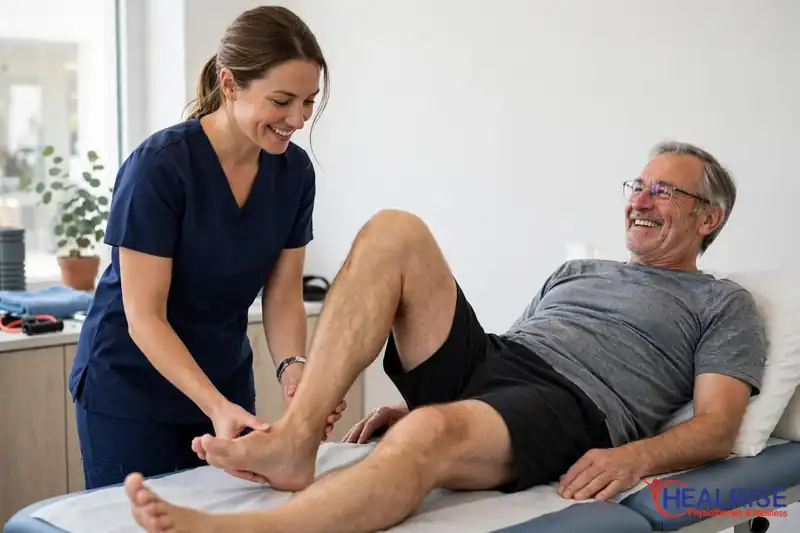
Knee replacement rehabilitation in Morinville starts the day of your surgery, and the work you do in the first 12 weeks decides how well your new knee will move for the rest of your life. If you or a family member is about to have a knee replacement, or has just had one, this guide explains exactly what happens after surgery, week by week. You will learn what a knee replacement is, why physiotherapy matters more than the surgery itself, the exercises that rebuild strength and bending, how to manage pain and swelling, and when you can walk, drive, and climb stairs again. Everything here is written in plain language, and every timeline is based on what surgeons and physiotherapists actually expect in real recovery.
Table of Contents
What Is a Knee Replacement?
A knee replacement, also called a total knee arthroplasty, is an operation that replaces the damaged surfaces of your knee joint with artificial parts made of metal and plastic. The surgeon removes the worn ends of the thigh bone and shin bone, along with the damaged cartilage, and fits smooth metal caps and a plastic cushion in their place. The new joint glides smoothly, the way a healthy knee does.
Most people have a knee replacement because of osteoarthritis, the wear and tear arthritis that grinds away the cartilage over years until bone rubs on bone. Every step hurts, stairs become hard, and even rest does not take the ache away. Our guide to arthritis physiotherapy in Morinville explains how arthritis affects the knee and what helps before surgery becomes necessary. Some people need a replacement because of rheumatoid arthritis, or because an old injury damaged the joint badly.
The operation usually takes one to two hours, and most people stay in hospital for one to three days. You will be up on your feet the day of surgery, with a walker and a physiotherapist beside you. That surprises many people, but moving early is part of the treatment, not something to fear. If knee pain is what brought you here, and you are still deciding whether surgery is the right step, our guide to knee pain physiotherapy in Morinville explains the non-surgical options that help many people delay or avoid a replacement.
Why Rehabilitation Matters More Than the Surgery Itself
Surgery gives you a new joint. Rehabilitation teaches it to move. A knee replacement is one of the most successful operations in modern medicine, but the surgery alone does not restore your knee. Without rehabilitation, the new joint stiffens, the thigh muscle weakens, and you end up walking with a limp that never fully goes away. With good rehabilitation, most people walk without pain, climb stairs normally, and get back to the activities they love.
The main problem after a knee replacement is stiffness, not instability. Unlike a hip replacement, there is no list of forbidden positions and nothing that can dislocate. You can bear your full weight on the leg from the start, and there is no brace. The whole job of the first three months is bending, straightening, and swelling. If the knee does not bend enough in the first six weeks, it becomes much harder later, because scar tissue tightens around the joint.
That is why the first six weeks are the window that matters most. The knee gains most of its bend in this period, and knee replacement rehabilitation in Morinville begins before you leave the hospital, not weeks later. A physiotherapist measures your bend and your straightening at every visit, and adjusts your exercises to keep you on track. The targets are clear: about 90 degrees of bend by four weeks, and about 110 degrees by six weeks. Full straightening matters even more than bending, because a knee that cannot straighten makes every step awkward and tiring. Our guide to post-surgery physiotherapy in Morinville explains how supervised rehabilitation works after any operation, and why the home exercise program matters as much as the clinic visits.
Rehabilitation also rebuilds the quadriceps, the big muscle at the front of your thigh. After surgery, this muscle switches off: it is swollen and sore, and the brain stops sending it strong signals. Physiotherapists call this quadriceps shutdown, and waking the muscle up is the first job of rehabilitation. Until the quadriceps works, the knee feels wobbly and stairs feel frightening.
Your 7-Phase Recovery Timeline
Recovery after a knee replacement follows a predictable pattern. Most people move through the same phases at roughly the same pace, though the exact timing varies with age, fitness before surgery, and how closely the home exercises are done. Here is what to expect.
Phase 1: Before Surgery (Prehab)
The best time to start rehabilitation is before the operation. A stronger leg before surgery recovers faster after it. In the weeks before your operation, a physiotherapist can teach you the exercises you will need afterward, so they feel familiar on day one. The key exercises are quad sets, heel slides, and straight leg raises, all described below. Walking as much as your knee allows, even short walks, keeps the muscles active.
This is also the time to prepare your home. Set up a chair with arms that is easy to get out of, put a shower chair and a raised toilet seat in place, remove loose rugs and cords, and stock up on ice packs. Ask a family member or friend to stay with you for the first few days, because you will need help with cooking, bathing, and getting around the house.
Phase 2: Days 0 to 3 in Hospital
A physiotherapist will visit you in hospital, usually within 24 hours of surgery. The first session is short and gentle. You will sit on the edge of the bed, stand with a walker, and take your first few steps. It hurts, and it is tiring, but it is safe, and it is the most important thing you will do that day.
In hospital, the exercises are simple: ankle pumps to prevent blood clots, quad sets to wake up the thigh muscle, heel slides to start bending the knee, and short walks in the hallway with the walker. Before you go home, usually on day two or three, the physiotherapist will check that you can get in and out of bed, walk with the walker, and climb a few stairs with a handrail.
Phase 3: Weeks 1 to 2 at Home
The first two weeks at home are the hardest. Swelling and pain are at their peak, and the knee feels stiff and heavy. This is normal, and it passes. The priorities now are controlling swelling with ice and elevation, starting gentle bending and straightening, and walking safely around the house with your walker.
Outpatient physiotherapy should begin within the first week of returning home. Most people attend two or three sessions a week at this stage. Between visits, do your home exercises several times a day. Short, frequent sessions work better than one long one, because the knee stiffens again between sessions.
By the end of week two, most people can bend the knee to about 60 to 80 degrees, walk around the house with the walker, and climb stairs one step at a time, holding the rail. Sleeping is often difficult in these first weeks. Try sleeping on your back with a pillow under your ankle, not under your knee, so the knee stays straight. A pillow under the knee feels comfortable, but it lets the knee heal in a bent position, which is hard to undo later.
Phase 4: Weeks 3 to 6, Building Range and Strength
This is the phase where most people start feeling hopeful. Pain decreases, swelling eases, and the knee bends past 90 degrees. The target is 90 degrees by week four and 110 degrees by week six, with the leg fully straight. About 90 to 110 degrees is enough for walking and stairs.
Most people move from a walker to a cane between weeks two and four, and the physiotherapist starts gait retraining, teaching you to walk evenly without limping. The exercises get harder now: sit-to-stand from a chair, mini squats, step-ups onto a low step, and the stationary bike. On the bike, start by rocking the pedals back and forth, then progress to full revolutions and light resistance. The bike is one of the best tools for regaining bend, because it moves the knee through its range smoothly and repeatedly.
Stairs become easier in this phase. By week six, many people can climb stairs with one foot per step, holding the rail lightly. Your surgeon will usually see you at the six-week mark to check the wound, the X-ray, and your range of movement.
Phase 5: Weeks 6 to 12, Getting Strong
By week seven, your knee should bend beyond 110 degrees, and you should be walking without significant pain. The focus shifts to strength and endurance for normal daily life: bridges, step-downs, calf raises, single-leg balance, and longer walks. The stationary bike, the elliptical, or level walking builds endurance without pounding the joint.
This is the phase where many people stop physiotherapy too early, because they feel much better. That is a mistake. The strength gains between weeks seven and twelve decide your long-term outcome. A knee that is strong at 12 weeks stays strong. A knee that is left weak at 12 weeks tends to stay weak, and the limp comes back.
Driving usually becomes possible in this phase, once your surgeon clears you. For a right knee replacement, that is usually around six weeks. For a left knee with an automatic car, it can be sooner. Desk-based work is usually possible by four to six weeks. Swimming is allowed once the wound is completely healed and dry, which is usually after six weeks.
Phase 6: Months 3 to 6, Back to Normal Life
By three months, most people are doing everything they want in daily life: walking, cycling, swimming, golf, and gardening. The knee reaches its maximum range of movement between three and four months, and mild swelling after a long walk is still normal for up to six months.
Keep the strengthening exercises going two or three times a week even after physiotherapy ends, because the quadriceps needs to stay strong for the life of the implant. A daily walk, built up gradually, is the simplest way to keep the knee healthy. If you are older and want to stay active and independent, our guide to physiotherapy for seniors in Morinville explains how a long-term strength and balance program keeps you moving well for years.
Phase 7: Months 6 to 12 and Beyond
The knee keeps improving for up to a year after surgery. The last gains are small but real: a little more bend, a little more strength, a little more confidence on uneven ground. By one year, most people forget they have an artificial knee for most of the day, and only notice it when kneeling or going down steep stairs.
A knee replacement typically lasts 15 to 20 years or more. Staying active, keeping the leg muscles strong, and keeping a healthy weight are the best ways to make it last. Avoid running, jumping, and high-impact sports unless your surgeon clears them. Walking, cycling, swimming, and golf are ideal for the long term.
Physiotherapy Exercises After Knee Replacement
The exercises change as you recover. Early exercises are gentle and done lying down. Later exercises are done standing and use your body weight. Do only the exercises your physiotherapist has given you. Mild discomfort is normal. Sharp pain is not, so stop any exercise that causes it.
Early Exercises: Weeks 1 to 2
Ankle pumps: lying down, point your toes away from you, then pull them back. Repeat 10 times, every hour you are awake. This prevents blood clots and keeps circulation moving.
Quad sets: lying down with your leg straight, tighten the front thigh muscle by pushing the back of your knee into the bed. Hold for five seconds, then relax. Repeat 10 times. This is the most important exercise in the first two weeks, because it wakes up the quadriceps.
Heel slides: lying down, slowly slide your heel toward your buttocks, bending the knee as far as comfortable. Hold for five seconds, then slide it back out. Repeat 10 times. This is the main exercise for regaining bend.
Straight leg raises: lying down, tighten your thigh muscle first, then lift your leg about 30 centimetres off the bed, keeping it straight. Hold for five seconds, then lower slowly. Repeat 10 times. Skip it if your physiotherapist has told you to, or if it causes sharp pain.
Glute squeezes: lying down, squeeze your buttock muscles together, hold for five seconds, then relax. Repeat 10 times. This keeps the hip muscles active while you are resting. Also walk around the house with your walker several times a day. Even a few minutes counts, because walking is an exercise, not just a way to get to the bathroom.
Mid-Stage Exercises: Weeks 3 to 6
Sit-to-stand: sit on a firm chair with your feet flat on the floor. Lean forward slightly and stand up without using your hands if you can, then sit back down slowly, in control. Repeat 10 times. This builds the thigh strength you need for everyday life.
Mini squats: stand behind a sturdy chair, holding the back lightly. Bend your knees slightly, as if you are about to sit, then straighten up, keeping your knees over your toes. Repeat 10 times. Do not squat deeply at this stage.
Step-ups: stand in front of a low step, about 10 centimetres high. Step up with your operated leg first, then bring the other foot up. Step down with the non-operated leg first. Repeat 10 times, holding a rail for support.
Stationary bike: start by rocking the pedals back and forth. When the knee bends enough, do full revolutions with no resistance, then add light resistance. Ten minutes a day is a good start.
Calf raises: stand behind a chair, holding the back lightly. Rise onto your toes, hold for two seconds, then lower slowly. Repeat 15 times. This strengthens the calves and improves your walking push-off.
Later Exercises: Weeks 6 to 12 and Beyond
Bridges: lie on your back with knees bent and feet flat. Lift your hips until your body forms a straight line from shoulders to knees. Hold for five seconds, then lower slowly. Repeat 10 times. This strengthens the buttocks and the back of the thigh.
Step-downs: stand on a low step, holding a rail. Slowly lower your non-operated foot to the floor, keeping your operated knee steady and over your toes, then step back up. Repeat 10 times on each side. This builds the control you need for stairs.
Single-leg balance: stand behind a chair, holding the back lightly. Lift one foot off the ground and balance on the other leg for 10 seconds. Repeat five times per leg. This trains the balance that keeps you steady on uneven ground.
Resistance bands and pool exercises: loop a resistance band around your ankle and practise straightening and bending the knee against it. Once the wound is fully healed, walking and gentle exercises in a warm pool are excellent, because the water takes the weight off the knee while the muscles work.
Managing Pain and Swelling
Pain and swelling are the two things that worry people most after a knee replacement. Both are normal, both improve with time, and both respond to simple measures done consistently.
Ice is your best friend in the first six weeks. Apply an ice pack for 20 minutes, three or four times a day, especially after exercises, with a thin cloth between the ice and your skin. A bag of frozen peas works well, because it moulds around the knee.
Elevation helps as much as ice. When you rest, raise your leg so the knee is above the level of your heart, propped on pillows with the ankle supported so the knee stays straight. Twenty minutes of elevation, several times a day, moves the swelling out of the knee.
Take your pain medicines on schedule, especially in the first two weeks. Many people try to tough it out and skip doses, then find they cannot do their exercises because the pain is too strong. The medicines are there so you can move. As the weeks pass, you will need them less and less. If a medicine makes you feel sick or drowsy, tell your doctor, because the dose or the type can usually be adjusted.
Move little and often. Long periods of sitting let the knee stiffen and the swelling build up, so get up and walk around the house every hour, even if it is only to the kitchen and back.
Some swelling and warmth around the knee is normal for three to six months after surgery. The knee may look puffy at the end of a busy day. That is not a sign of damage. But if the swelling suddenly gets much worse, the knee becomes hot and red, or you develop a fever, call your surgeon. Those are signs of infection, and infection needs fast treatment.
Walking Aids: Walker, Cane, and When to Let Go
You will use a walker first, then a cane, then nothing. Most people are off walking aids within six weeks. There is no prize for giving up an aid early: walking badly without one is worse than walking well with one.
The walker comes first, for the first one to two weeks. Walk inside the walker, not behind it. Move the walker forward a short distance, step into it with your operated leg first, then bring the other leg forward. Keep your back straight and look ahead, not down at your feet.
The cane comes next, usually between weeks two and four. Hold the cane in the hand opposite your operated leg. That feels wrong at first, but it is correct: the cane and the operated leg move forward together, sharing the load. The cane should be the right height. When you stand upright with your arms at your sides, the top of the cane should reach the crease of your wrist.
You are ready to walk without an aid when you can walk without limping, when the knee feels steady, and when your physiotherapist agrees. That is usually between four and six weeks. If you feel unsteady on uneven ground, keep the cane for outdoor walks a little longer. A fall after a knee replacement can damage the new joint, so protecting yourself from falls matters. Our guide to falls prevention for seniors in Morinville explains how balance and strength training keeps you steady, on any surface and in any season.
What to Expect at Your First Visit to Healrise
If you have surgery planned, come to Healrise before the operation for a prehab assessment. If you have already had surgery, come in the first week after you get home. Either way, the first visit takes about an hour. Our knee replacement rehabilitation Morinville program is built around your goals, whether that is walking the dog, climbing the stairs at home, or getting back to gardening.
The physiotherapist will start by asking about your surgery, your pain, your medicines, and your goals. What do you want to be able to do again? Walk the dog? Climb the stairs at home? Get back to gardening? Your goals shape the program.
Then comes the physical assessment: the physiotherapist measures how far your knee bends and how straight it goes, tests the strength of your quadriceps and hip muscles, watches you walk, and checks the wound. You will leave with a home exercise program written out clearly, and a plan for how often to come in. Most people start with two or three visits a week, then taper to once a week, then to check-ins.
Bring your surgery report or discharge papers if you have them, a list of your medicines, the walking aid you are using, and loose clothing that lets the physiotherapist see and move your knee. If a family member helps you at home, bring them along, so they can learn how to help with the exercises.
Warning Signs: When to Call Your Surgeon
Most recoveries go smoothly, but there are signs that need fast attention. Call your surgeon, or go to emergency, if you notice any of these:
A fever above 38 degrees Celsius, or chills and sweating, especially in the first weeks. Increasing redness, warmth, or drainage from the wound. Pain in the calf, or swelling in the calf that is much worse on one side, which can be a blood clot. Chest pain or shortness of breath, which needs emergency care immediately. A knee that suddenly cannot bend at all, or a knee that gives way. Severe pain that is not controlled by your medicines. A fall onto the operated knee.
Do not wait to see if these get better on their own. After a knee replacement, fast action on a warning sign can prevent a serious problem.
Frequently Asked Questions
How long does it take to recover fully from a knee replacement?
Most people are back to normal daily life by three months. Walking, stairs, driving, and light work are all realistic by then. The knee keeps improving for up to 12 months, with the last gains in strength and confidence coming slowly. Full recovery means different things to different people, so talk to your physiotherapist about what it means for you.
When can I drive after a knee replacement?
For a right knee replacement, most surgeons clear driving at about six weeks, once you can bend the knee enough to get in and out of the car and press the pedals safely. For a left knee with an automatic car, it can be sooner, sometimes two to three weeks. Do not drive until your surgeon clears you, and check with your insurance provider, because driving against medical advice can affect your coverage.
How much should my knee bend after surgery?
The usual targets are about 90 degrees by four weeks, about 110 degrees by six weeks, and 120 degrees or more by 12 weeks. Full straightening, zero degrees, matters even more than bending. Around 90 to 110 degrees is enough for walking and stairs. Normal knee bending is about 130 to 135 degrees, and most people get close to that by a year.
Is pain normal weeks after a knee replacement?
Yes. Mild pain, stiffness, and swelling are normal for three to six months, especially after activity or at the end of the day. The pain should trend downward over time, even if it does not disappear in a straight line. Some days will feel worse than others. If the pain suddenly gets much worse, or stops improving for several weeks, tell your physiotherapist or surgeon.
Can I kneel on my new knee?
Many people can kneel after three to six months, but it often feels strange, because the front of the knee is numb after surgery. Use a cushion, and kneel on a soft surface. If kneeling matters to you, for gardening or for prayer, mention it to your physiotherapist so it can be part of your program.
Will I need physiotherapy for the full 12 weeks?
Most people benefit from it. The first six weeks restore bending and walking. Weeks seven to twelve build the strength that decides how well the knee works for years. Stopping physiotherapy early is the most common reason people end up with a stiff or weak knee. If cost or travel is a problem, tell your physiotherapist, because the program can often be adjusted to fewer visits with a strong home program.
Where can I get knee replacement rehabilitation in Morinville?
At Healrise Physiotherapy and Wellness in Morinville. You can book a prehab assessment before your surgery, or come in during the first week after you get home from hospital. Bring your surgery report or discharge papers, a list of your medicines, and the walking aid you are using.
Knee replacement rehabilitation in Morinville works best when it starts early, follows a clear plan, and keeps going until the knee is strong, not just until it feels better. Your new knee is only as good as the rehabilitation behind it. If you have surgery planned, or you are already recovering at home, book an assessment at Healrise Physiotherapy and Wellness in Morinville. We will measure your knee, build your program around your goals, and walk with you through every phase, from the first steps in hospital to the day you forget you ever had surgery.