 by
You are twenty-something weeks pregnant, and simple things have started to hurt. Rolling over in bed sends a sharp ache through your pelvis. Standing for more than a few minutes makes your lower back throb. Walking to the car feels like your hips are coming apart. If this sounds familiar, you are not alone, and you are not imagining it. Pregnancy back pain physiotherapy in Morinville helps expectant mothers understand exactly why their back and pelvis hurt, and gives them safe, practical ways to feel better and stay active through the rest of the pregnancy.
About half of all pregnant women experience pelvic girdle pain, and back pain is nearly as common. The good news is that most of it responds well to physiotherapy. This guide explains, in plain words, why pregnancy changes your back and pelvis, the seven ways physiotherapy helps, which exercises are safe, and the warning signs that mean you should call your doctor or midwife instead.
Table of Contents
Why Back and Pelvic Pain Happens in Pregnancy
Pregnancy changes your body in ways that put new stress on your back and pelvis, and it does so quickly. Three things drive most of the pain.
First, your weight shifts forward. As your belly grows, your centre of gravity moves forward, and your lower back arches more to compensate. That extra curve loads the small joints and muscles of the lower back all day, every day.
Second, a hormone called relaxin loosens your ligaments. Your body produces relaxin to prepare the pelvis for birth, making the joints of the pelvis more flexible. That flexibility is necessary, but it also means the sacroiliac joints (where the spine meets the pelvis) and the pubic joint at the front move more than they should. When those joints move too much, they hurt.
Third, your core and pelvic floor muscles are stretched and working harder. The deep abdominal muscles stretch as the belly grows, and the pelvic floor carries more and more weight. When these muscles tire, the back and pelvis take the load instead.
Pelvic girdle pain usually starts around the 18th week of pregnancy and often peaks between the 24th and 36th weeks. It can feel like a stabbing, dull, or burning ache near the sacroiliac joints at the back of the pelvis, at the front near the pubic bone, or both. Some women feel it when they roll over in bed, climb stairs, stand on one leg to get dressed, or walk for more than a few minutes. The pain is real, it is common, and it is treatable. Our pelvic floor physiotherapy in Morinville guide explains how the pelvic floor works in more detail, and our back pain physiotherapy in Morinville guide covers back pain outside of pregnancy.
7 Ways Pregnancy Back Pain Physiotherapy in Morinville Helps
Physiotherapy during pregnancy is not about pushing through pain or doing hard workouts. It is about assessment, gentle hands-on care, and teaching you how to move well. Here are the seven ways it helps.
1. Finding exactly what hurts and why
Not all pregnancy back pain is the same. Low back pain, sacroiliac joint pain, pubic symphysis pain, and sciatica feel different and need different care. Your first assessment sorts out which structure is causing the pain, what movements provoke it, and what your daily life demands. That matters, because the right plan for sacroiliac pain is different from the right plan for a pinched nerve.
2. Gentle hands-on treatment for stiff, sore joints
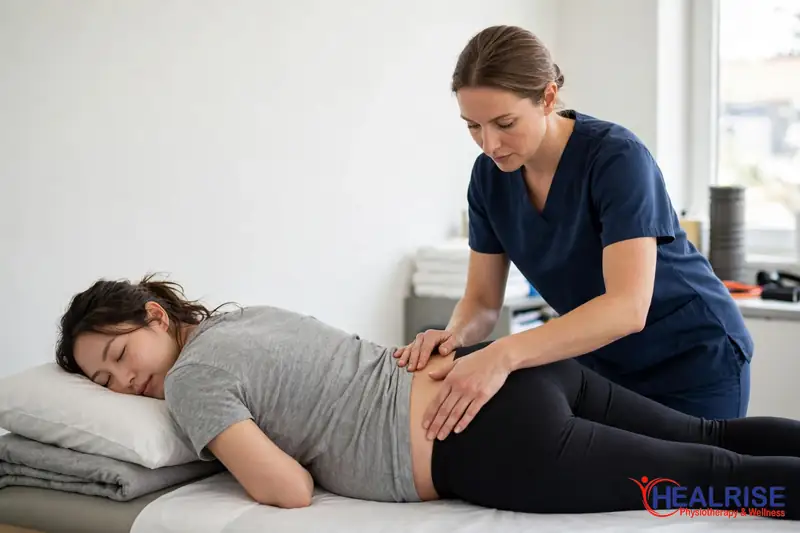
When a sacroiliac joint is irritated, gentle mobilization and soft-tissue work can ease the stiffness around it. This is not forceful cracking. Prenatal manual therapy is slow, gentle, and always done in positions that are comfortable and safe for pregnancy, usually side-lying with pillows for support. Many women feel looser and less sore after a single session.
3. Pelvic floor and deep core retraining
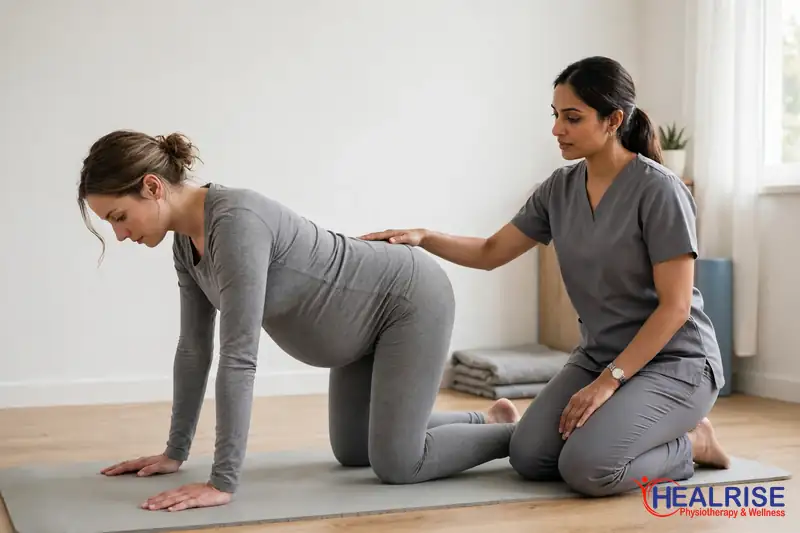
The pelvic floor and the deep core muscles work together like a sling holding up your belly. When they are weak or poorly coordinated, the pelvis moves too much and hurts. Physiotherapy teaches you how to find and use these muscles correctly, with simple, gentle exercises you can do at home. Stronger pelvic floor muscles also help prepare your body for birth and make postpartum recovery easier.
4. A safe exercise program built for your trimester
Staying active during pregnancy helps, but the wrong exercises make pelvic pain worse. Your physiotherapist builds a program around your trimester, your pain, and your fitness: gentle strengthening for the hips and glutes, pelvic tilts, breathing exercises, and safe stretching. The goal is to keep you moving without provoking the pain, and the program changes as your pregnancy progresses.
5. Practical advice for daily life
Much of pregnancy pelvic pain comes from everyday movements: rolling over in bed, getting out of a car, climbing stairs, standing on one leg. Small changes make a big difference: keeping your knees together when you roll over, sitting down to put on shoes instead of standing on one leg, taking the stairs one at a time, and avoiding heavy lifting. Your physiotherapist walks through your actual day and finds the movements that are provoking your pain.
6. Advice on pelvic support belts
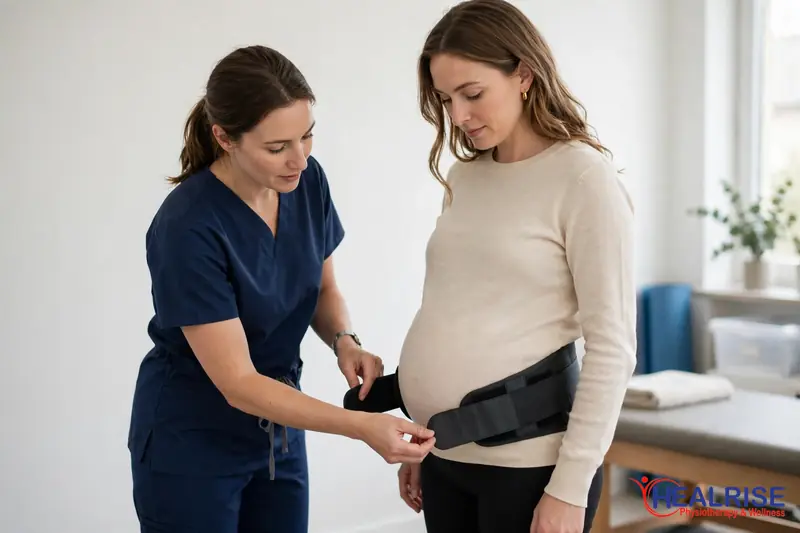
A pelvic support belt can help some women, especially those whose sacroiliac joints feel unstable. It is not a cure, and it is not right for everyone. Your physiotherapist can tell you whether a belt would help you, show you how to wear it correctly, and make sure it is not masking a problem that needs a different fix.
7. A plan for birth and for after the baby arrives
Physiotherapy does not stop at pain relief. Your physiotherapist helps you prepare your pelvic floor and hips for labour, talks through positions that may be easier on your pelvis, and plans a postpartum check. Most pelvic girdle pain settles within about three months after birth, but a small number of women have pain that lingers, and those women benefit most from early postpartum care.
Is Physiotherapy Safe During Pregnancy?
Yes, when it is done by a physiotherapist who is trained in prenatal care. Prenatal physiotherapy is gentle, and every technique and exercise is chosen with pregnancy in mind. There is no forceful manipulation, no lying flat on your back for long periods after the first trimester, and no exercise that puts you or the baby at risk.
Tell your physiotherapist how far along you are, and mention any pregnancy complications, such as high blood pressure, placenta previa, or a history of preterm labour. If your doctor or midwife has given you any activity restrictions, bring those to your first appointment. Pregnancy back pain physiotherapy in Morinville works alongside your prenatal care, not instead of it.
What a Prenatal Physio Session Looks Like at Healrise
Your first visit starts with a conversation: when the pain started, what makes it better or worse, how you sleep, how you move through your day, and what your birth plans look like. Then comes a gentle physical assessment, usually in side-lying, checking how your pelvis and lower back move and which muscles are working well and which are not.
From there, you get a plan: hands-on treatment if it will help, a short home exercise program, and practical advice for the movements that hurt most. Follow-up visits are usually shorter, focused on how you are responding and adjusting the plan as your pregnancy progresses. Most women come once a week or once every two weeks, depending on how much pain they are in. Every plan for pregnancy back pain physiotherapy in Morinville is built around your trimester, your pain, and your daily life.
Exercises to Avoid During Pregnancy
Most movement is good during pregnancy, but a few things are worth avoiding:
- Lying flat on your back for long periods after the first trimester, since it can reduce blood flow. Short periods are fine, but do not sleep or exercise on your back for long.
- Deep twisting or crunching abdominal exercises. Your abdominal muscles are already stretched, and sit-ups or deep twists load them the wrong way.
- Heavy lifting and sudden, jerky movements. If something feels like a strain, it probably is.
- High-impact exercise if you already have pelvic pain. Running and jumping can provoke sacroiliac pain. Walking, swimming, and prenatal yoga are usually better choices.
- Any exercise that causes pain, leaking, dizziness, or a feeling of pressure in the pelvis. Stop and tell your physiotherapist.
When in doubt, ask. A two-minute question at your appointment can save you a week of extra pain.
Should You Wear a Pelvic Support Belt?
A pelvic support belt can be genuinely helpful for some women, especially when the sacroiliac joints feel loose or unstable. It gives the pelvis a little extra compression, which can make walking and standing noticeably easier. But a belt is a support, not a treatment. It does not strengthen anything, and wearing one all day can make the muscles lazier over time.
The honest answer: try one if your physiotherapist recommends it, wear it for the activities that provoke your pain, and take it off when you are resting. Combine it with the strengthening exercises, not instead of them.
Warning Signs: When to Call Your Doctor or Midwife
Physiotherapy helps with muscle and joint pain, but some symptoms are not physio problems. Call your doctor or midwife promptly, or go to urgent care, if you notice:
- Vaginal bleeding or leaking fluid
- Severe headache, vision changes, or swelling of the face and hands
- Reduced fetal movement
- Severe abdominal pain that does not ease with rest
- Fever, burning when you pass urine, or back pain with a fever
- Contractions before 37 weeks, or regular tightening that does not stop
Do not try to treat these with physiotherapy. These are medical situations, and getting checked quickly is always the right call.
After the Baby Arrives: The Postpartum Check
Most pelvic girdle pain settles within about three months after birth, as relaxin levels fall and the joints tighten up again. But it is worth booking a postpartum physiotherapy check around 6 weeks after delivery, even if you feel fine. Your pelvic floor and core have been through a lot, and a check catches weakness, separation of the abdominal muscles, or lingering pelvic pain before they become long-term problems.
If you are a new grandparent doing a lot of lifting and carrying, our physiotherapy for seniors in Morinville guide covers safe lifting and staying strong for the grandkids.
Pregnancy Back and Pelvic Pain FAQs
Is physiotherapy safe in pregnancy?
Yes. Prenatal physiotherapy is gentle and designed for pregnancy: no forceful techniques, no prolonged lying on your back after the first trimester, and every exercise chosen for your stage of pregnancy. Tell your physiotherapist about any complications or activity restrictions from your doctor or midwife.
Which trimester is best to start physiotherapy?
Any trimester. Many women start in the second trimester, when pelvic pain often begins around the 18th week, but starting earlier can prevent problems, and starting in the third trimester still helps. It is never too late to get assessed.
Should I wear a pelvic support belt?
It can help, especially if your sacroiliac joints feel unstable. Wear it for activities that provoke pain, take it off when resting, and combine it with strengthening exercises. Your physiotherapist can tell you whether one would help you and show you how to wear it correctly.
Which exercises should I avoid while pregnant?
Avoid lying flat on your back for long periods after the first trimester, deep twists and sit-ups, heavy lifting, and high-impact exercise if you already have pelvic pain. Stop any exercise that causes pain, leaking, dizziness, or pelvic pressure, and ask your physiotherapist if you are unsure.
Will the pain go away after I give birth?
Usually, yes. Most pelvic girdle pain settles within about three months after delivery. A small number of women have pain that lingers, which is why a postpartum physiotherapy check around 6 weeks is worth booking even if you feel fine.
Can massage help with pregnancy back pain?
Yes, gentle prenatal massage can ease sore muscles and help you relax. It works best alongside physiotherapy, not instead of it. Our massage therapy in Morinville guide explains what prenatal massage involves.
Book Your Prenatal Physiotherapy Assessment in Morinville
Back and pelvic pain do not have to be the price of pregnancy. Pregnancy back pain physiotherapy in Morinville at Healrise Physiotherapy and Wellness starts with an honest assessment: we will find out what is actually causing your pain, give you safe hands-on care, and teach you how to move, sleep, and exercise in ways that keep you comfortable and active through the rest of your pregnancy. No doctor’s referral is needed, and we offer direct billing to most insurance plans.
Visit us at 10507 100 Ave Unit 101, Morinville, AB, or call +1 587-485-0787 to book. We are open 7 days a week, and walk-ins are welcome.