by
Pain on the inside of your elbow when you shake hands, open a jar, or lift a bag can make ordinary days feel hard. If that sounds familiar, golfer’s elbow physiotherapy in Morinville may be exactly what you need. Despite the name, most people with this condition are not golfers. It is one of the most common arm problems physiotherapists treat, and it almost always gets better with the right care.
This guide explains what it is in plain words, what causes it, how it differs from tennis elbow, how we assess it, what treatment works, how long recovery takes, and the warning signs that mean you should get checked.
Table of Contents
What Golfer’s Elbow Really Is
Golfer’s elbow is the everyday name for medial epicondylitis. In simple terms, it is an overloaded tendon. The forearm muscles that bend your wrist and fingers attach to a bony bump on the inside of your elbow, called the medial epicondyle. When those tendons are asked to do more than they can handle, day after day, the tissue starts to struggle. It is more of a wear-and-tear problem than true inflammation, which is why the pain usually builds over weeks instead of appearing after one big injury.
The pronator teres, the muscle that turns your palm downward, is the one most often involved, but any of the wrist flexor muscles can be part of the problem.
Golfer’s Elbow vs Tennis Elbow: Know the Difference
People mix these two up all the time, so here is the simple version. Golfer’s elbow hurts on the inside of the elbow and involves the tendons that bend the wrist. Tennis elbow hurts on the outside of the elbow and involves the tendons that straighten the wrist. They are mirror images of each other. If you already read our guide to tennis elbow physiotherapy in Morinville, this post will feel familiar, because the recovery approach is similar even though the sore spot is on the opposite side.
What Causes Golfer’s Elbow
Classic causes include repetitive gripping and wrist bending: swinging a golf club, especially with poor technique or by hitting the ground too often. But the list is much longer than golf. Racquet sports, throwing sports, and weightlifting can trigger it. So can manual work, gripping tools like hammers and screwdrivers for long stretches, heavy lifting, and even long hours of typing and mouse work with the wrist bent.
A sudden jump in activity often lights the fuse, like a big weekend of yard work or a sudden return to the gym after months off. Age plays a part too. Golfer’s elbow most often shows up between 30 and 50, because tendons gradually lose resilience over time.
The Symptoms Most People Notice
It usually starts as a dull ache on the inside of the elbow. Then the familiar pattern sets in: tenderness when you press the bony bump on the inner elbow, pain that worsens with gripping or making a fist, a weak grip so everyday objects feel heavier than they should, stiffness in the elbow, and an ache spreading down the inner forearm toward the wrist.
Some people also notice tingling or numbness in the ring and little fingers. That happens when swelling irritates the ulnar nerve, which runs right past the inner elbow. It most often strikes the dominant arm, since that arm does more work.
Golfer’s Elbow Physiotherapy in Morinville: What Your First Visit Looks Like
A proper assessment is the foundation of good treatment. Your first visit for golfer’s elbow physiotherapy in Morinville starts with a conversation. When did the pain begin? What were you doing more of in the weeks before? What sets it off now?
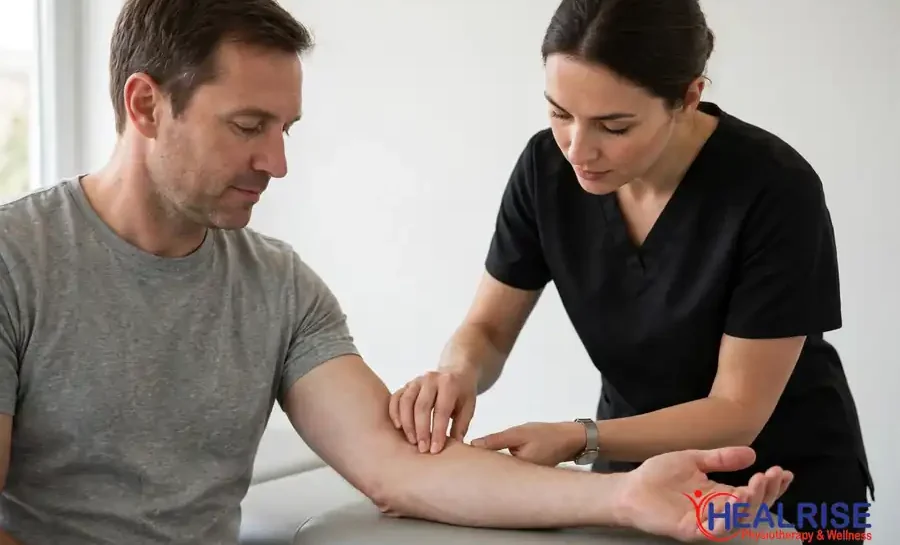
Then comes a careful hands-on check: grip strength on each side, how your elbow and wrist move, and gentle pressure around the inner elbow to find the exact sore spot. We also check whether the ulnar nerve is irritated and screen your neck and shoulder, since problems there can send pain down the arm and mimic elbow trouble. Two people can have elbow pain for very different reasons, and the plan has to match the real cause.
How Golfer’s Elbow Physiotherapy in Morinville Helps You Recover
Research consistently shows that a planned physiotherapy program is the best first line of care for this condition. Progressive loading, the right exercises in the right order, outperforms rest alone (see the OrthoInfo overview linked below).
A typical course of golfer’s elbow physiotherapy in Morinville includes:
- Load management. We help you change how you do aggravating tasks so the tendon can settle, without stopping your life. Small changes in grip, tool handles, and lifting technique make a big difference.
- Progressive strengthening. The core of recovery. We start with gentle holds, then move to slow eccentric wrist exercises that rebuild the tendon’s capacity, never by pushing through sharp pain.
- Manual therapy. Hands-on techniques to the forearm and elbow ease pain and improve movement. Our manual therapy service is often part of the plan.
- Shockwave therapy. For stubborn tendon pain that has lasted months, focused shockwave can restart the healing process. Read how it works in our shockwave therapy in Morinville guide.
- Activity changes. We review your work setup, sport technique, and daily habits, then adjust them so the tendon gets enough load to heal but not so much that it flares up.
- A clear home program. A short, realistic set of exercises between visits, because consistency at home is where most of the healing happens.
Home Exercises That Help Golfer’s Elbow
These are the exercises physiotherapists prescribe most often. Go gently, stop if anything causes sharp pain, and ask your physiotherapist before starting if your symptoms include numbness.
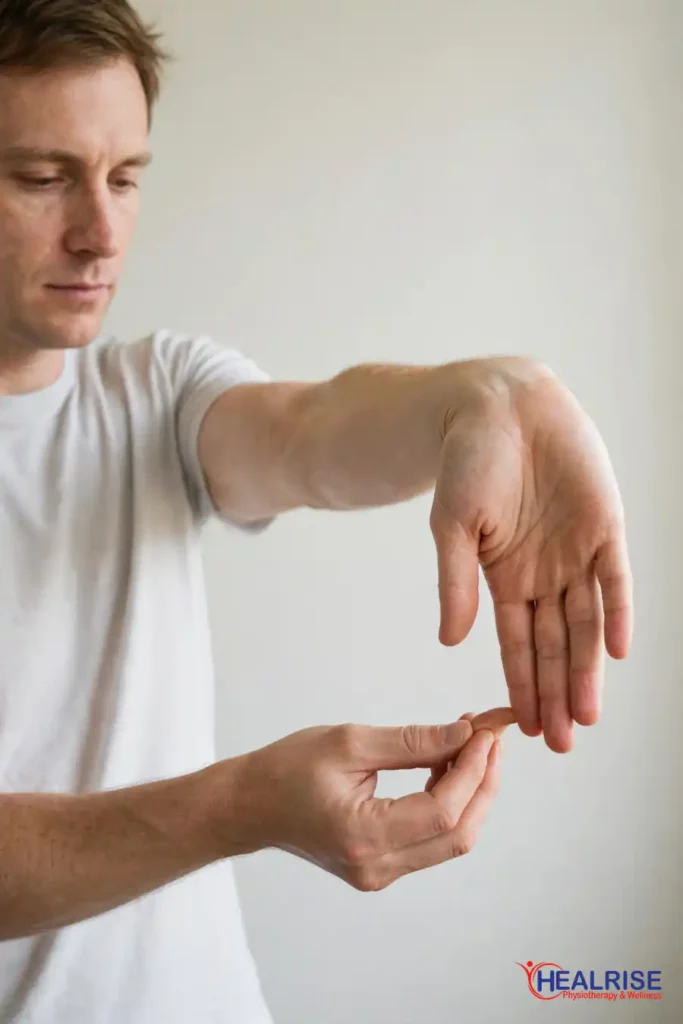
Wrist flexor stretch. Straighten your arm in front of you with your palm facing up. With your other hand, gently pull your fingers back and down until you feel a mild stretch along the inner forearm. Hold for 30 seconds, repeat 3 times, a few times a day.
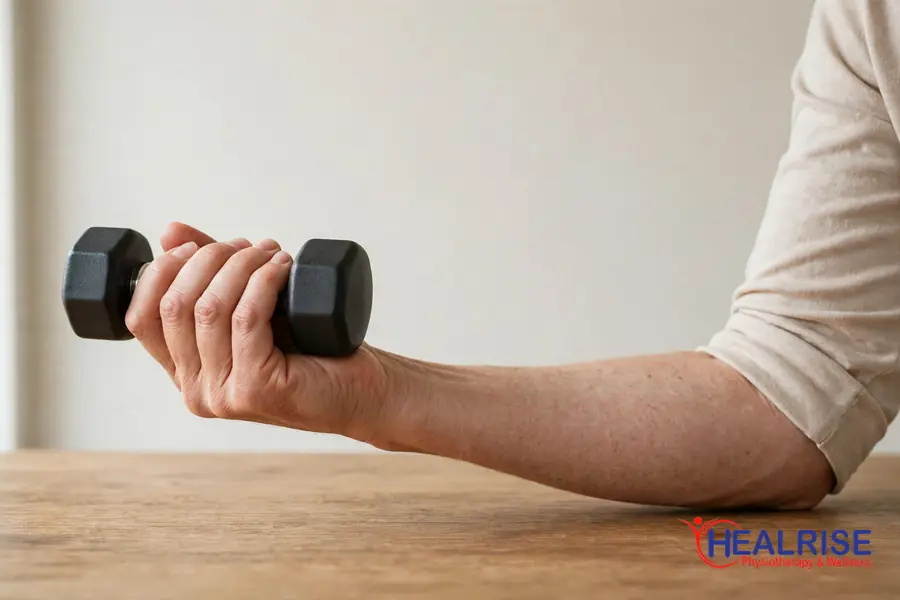
Eccentric wrist curl. Sit with your forearm resting on a table, palm up, holding a very light weight or a water bottle. Use your other hand to help lift your wrist up, then slowly lower it back down over about 5 seconds. The slow lowering is the part that rebuilds the tendon. Start with 2 sets of 10, once a day.
Wrist rotation. Hold a hammer or a stick by its end with your elbow tucked at your side, thumb pointing up. Slowly rotate your wrist so your palm faces down, then back up. This strengthens the pronator and supinator muscles that protect the inner elbow. Start with 2 sets of 10 each direction.
Grip squeeze. Squeeze a soft ball or therapy putty for 5 seconds, then release. Repeat 10 times, twice a day. Stop if it triggers elbow pain that lingers.
Simple Habits That Prevent It Coming Back
Warm up the forearm with a minute of gentle wrist circles before heavy gripping work or sport. Check your technique, a golf or tennis coach can spot grip and swing faults that overload the inner elbow in one session. Use the right equipment: larger, padded grips on tools and clubs reduce forearm strain. Build up gradually, never double your activity in one week. And keep doing your strengthening exercises even after the pain fades, because quitting early is the most common reason golfer’s elbow returns.
How Long Does Recovery Usually Take?
Golfer’s elbow heals slowly because tendons rebuild gradually. Many people notice real improvement within 6 to 8 weeks of consistent treatment, but full recovery often takes 3 to 6 months, and stubborn cases can take longer.
Patience is part of the treatment. The people who recover best keep up with their exercises and load changes even after the pain starts to fade. Finishing a full course of golfer’s elbow physiotherapy in Morinville matters more than stopping at the first good week.
Warning Signs You Should Get Checked Promptly
Most golfer’s elbow is not dangerous, but get checked soon if you notice any of these: pain after a fall or blow to the elbow, visible swelling or bruising, numbness or tingling that keeps spreading into the hand, pain that keeps worsening despite weeks of rest, or an elbow that feels locked or will not straighten fully. In Alberta, no referral is needed to see a physiotherapist.
Healrise’s Golfer’s Elbow Care in Morinville
At Healrise Physiotherapy & Wellness in Morinville, care starts with a full assessment and ends with a plan built around your work, sport, and goals. Lead physiotherapist Dipak Chunara guides your strengthening, manual therapy, and activity changes, so you recover properly instead of just resting and hoping.
We offer direct billing, we are open 7 days a week, and you do not need a referral to book. If you play racquet or field sports, our sports injury physiotherapy in Morinville program can keep you performing while you heal. Explore our full physiotherapy services to see everything we treat.
Frequently Asked Questions
1. Do I need a doctor’s referral for golfer’s elbow physiotherapy in Morinville?
No. In Alberta, you can see a physiotherapist directly without a referral. Call Healrise at 587-485-0787 and book your assessment right away.
2. How long does golfer’s elbow take to heal?
Most people feel real improvement in 6 to 8 weeks with consistent treatment, but full recovery usually takes 3 to 6 months. Stubborn cases that have been ignored for a long time can take longer.
3. Can I keep playing golf or my sport while I recover?
Often yes, with changes. Your physiotherapist will adjust your load, technique, and training volume so you can stay active without overloading the tendon. Playing through sharp pain is never advised.
4. Will golfer’s elbow go away on its own?
It can settle with rest, but it often lingers for months or comes back, because rest alone does not rebuild the tendon’s strength. A guided strengthening program gives a faster, more lasting recovery.
5. Will I need surgery for golfer’s elbow?
Almost never. Surgery is only considered when months of proper non-surgical treatment have not helped. The large majority of cases recover fully with physiotherapy.