 by
Meniscus Tear Physiotherapy in Morinville: Heal Your Knee and Move Again
Intro
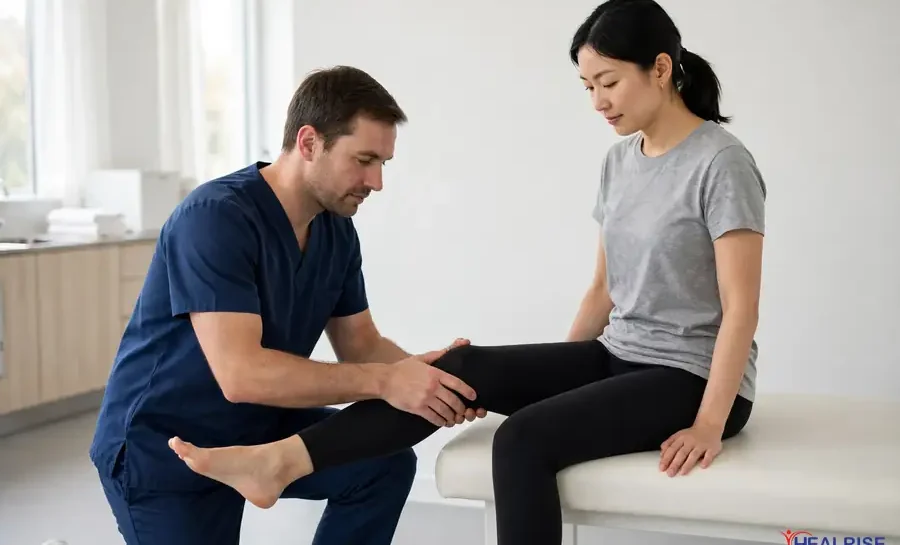
Meniscus tear physiotherapy Morinville patients rely on starts with one simple goal: getting your knee moving again without pain. A torn meniscus can turn everyday things into a struggle. Climbing stairs hurts. Getting up from a chair feels stiff. A walk around the block leaves your knee swollen. And if you play hockey or soccer, the fear of twisting your knee again can keep you off the ice or the field for months.
The good news is that most meniscus tears do not need surgery. With the right physiotherapy plan, many people recover fully, rebuild the strength around their knee, and return to the activities they love. At Healrise Physiotherapy and Wellness in Morinville, we assess your knee, find out exactly what is causing the pain, and build a step-by-step plan around your life, your work, and your goals.
Table of Contents
What Is a Meniscus Tear?
Your knee has two C-shaped pieces of cartilage called the menisci. One sits on the inside of your knee (the medial meniscus) and one on the outside (the lateral meniscus). Think of them as shock absorbers. Every time you walk, run, jump, or squat, they spread the weight across your knee joint, cushion the bones, and help the knee bend and straighten smoothly.
A meniscus tear happens when part of this cartilage is damaged. The tear can be small, like a tiny split, or large, like a flap of cartilage that catches inside the joint. Some tears happen in a single moment. Others develop slowly over years as the cartilage wears down.
The meniscus has a poor blood supply in its inner part, which is why it heals slowly on its own. The outer edge has better blood flow and a better chance of healing. That is one reason why two people with the “same” injury can recover at very different speeds. Your physiotherapist looks at the type of tear, your age, your activity level, and how your knee responds to movement before deciding on a meniscus tear physiotherapy Morinville plan.
Types of Meniscus Tears
Not all meniscus tears are the same. Knowing the type helps your physiotherapist choose the right treatment.
Traumatic tears
These happen suddenly, usually during sport or a fall. You twist your knee while your foot is planted, you land awkwardly from a jump, or you take a knock during a game. Traumatic tears are common in younger, active people and often come with swelling within a few hours.
Degenerative tears
These develop gradually. As we age, the meniscus becomes less flexible and more fragile. A simple movement, like squatting to pick something up or turning quickly, can tear it. Degenerative tears are common after the age of 40 and often appear alongside early knee arthritis.
Bucket-handle tears
This is a larger tear where a strip of cartilage flips into the centre of the knee, like the handle of a bucket. It can cause the knee to lock, so you cannot fully straighten your leg. A locked knee needs prompt medical attention.
Radial and flap tears
A radial tear runs across the meniscus, while a flap tear leaves a loose piece of cartilage that can catch during movement. Both can cause clicking, catching, and pain when you twist or squat.
Complex tears
A complex tear combines more than one pattern, often in a knee that already has some wear and tear.
What Causes a Meniscus Tear in Morinville?
Meniscus tears happen for the same reasons everywhere, but life in Morinville adds its own twists.
Sport. Hockey, soccer, basketball, and skiing all involve quick turns, sudden stops, and deep knee bends.
Work. Jobs that involve kneeling, crouching, lifting, or climbing put repeated strain on the knees. Farm work, construction, and warehouse work around Morinville and St. Albert all ask a lot of the knees over a long day.
Winter. Icy sidewalks and parking lots in an Alberta winter cause slips and awkward twists. A sudden step to catch yourself can load the meniscus in exactly the wrong way.
Age and wear. After 40, the meniscus thins and stiffens. A movement that would have been harmless at 25 can cause a tear at 55. This is why many degenerative tears show up during ordinary activities, not sport.
Previous knee injuries. A knee that has already been injured, or one with early arthritis, is more vulnerable. Weak thigh muscles also add strain, because the muscles are not sharing the load the way they should. Whatever the cause, meniscus tear physiotherapy Morinville care starts with finding the exact source of the pain.
If your knee pain started after a twist, a fall, or a sports injury, tell your physiotherapist exactly how it happened, as the mechanism of injury guides the assessment.
Signs Your Knee Pain Could Be a Meniscus Tear
A meniscus tear does not always announce itself clearly. Some people feel a sharp pain at the moment of injury. Others notice symptoms that build up over a day or two. Watch for these signs:
- Pain along the inner or outer edge of the knee, right on the joint line
- Swelling that appears within hours of the injury, or after activity
- Stiffness when you try to bend or straighten the knee fully
- Clicking, catching, or popping when you move the knee
- Pain when you twist, pivot, squat, or kneel
- Trouble climbing stairs or getting up from a low chair
- A feeling that the knee might buckle or give way
- The knee locking, so it will not bend or straighten at all
- Less confidence walking on uneven ground or playing sport
Pain that sits on the joint line, combined with clicking or catching, is the classic meniscus pattern. If your knee locks and you cannot straighten it, seek medical care promptly, as a displaced piece of cartilage may be blocking the joint.
Not every knee pain is a meniscus tear. Our guide to knee pain physiotherapy in Morinville explains the other common causes and how we tell them apart.
Meniscus Tear or Something Else?
Knee pain has many causes, and several of them feel similar at first. A proper assessment matters, because the treatment for each one is different.
ACL injury
The ACL is a ligament, not cartilage. An ACL injury often comes with a popping sound at the moment of injury, rapid swelling, and a feeling that the knee is unstable. Meniscus and ACL injuries often happen together in the same twist. If you have had an ACL injury, our ACL rehabilitation in Morinville guide explains the recovery path.
IT band syndrome
IT band pain sits on the outside of the knee and is common in runners and cyclists. It usually hurts during activity and eases with rest, while a meniscus tear often hurts with twisting and squatting and may click or catch. Read our IT band syndrome treatment in Morinville page to compare the symptoms.
Knee arthritis
Arthritis pain tends to be a dull ache with morning stiffness that eases as you move. A meniscus tear is more often sharp, linked to a specific movement, and may come with catching or locking. The two conditions often exist together, and physiotherapy helps both.
Kneecap pain
Pain behind or around the kneecap usually worsens with stairs, squats, or sitting with bent knees for a long time. It rarely causes locking or the joint-line tenderness that points to the meniscus.
Your physiotherapist uses your history, hands-on testing, and movement checks to work out which structure is causing the problem. No single test proves a meniscus tear on its own. The picture comes from putting all the findings together.
How Meniscus Tear Physiotherapy Morinville Helps
Meniscus tear physiotherapy Morinville patients receive at Healrise is built around one idea: the tear itself is only part of the story. The muscles around your knee, your balance, your walking pattern, and your confidence all decide how well you recover.
Physiotherapy helps in several ways:
Eases pain and swelling. Gentle movement, hands-on treatment, and advice on ice and activity help settle the knee down in the first days and weeks.
Restores movement. A stiff knee gets stiffer if you avoid bending it. Guided mobility work restores your ability to bend and straighten the knee without forcing it.
Rebuilds strength. Strong thigh, hip, and calf muscles take load off the meniscus. Strength is the single most important factor in a lasting recovery.
Improves balance and control. After a knee injury, balance and coordination drop. Balance training protects the knee when you twist, turn, or step on uneven ground.
Retrains walking and movement. Small changes in how you walk, squat, and climb stairs can take a surprising amount of pressure off the injured cartilage.
Prepares you for sport or surgery. If you plan to return to hockey or soccer, your knee needs to be ready for cutting, pivoting, and contact. If surgery is needed, a stronger knee before the operation means a faster recovery after it.
What Happens at Your First Visit to Healrise
Your first visit is about understanding your knee and your life, not just the injury.
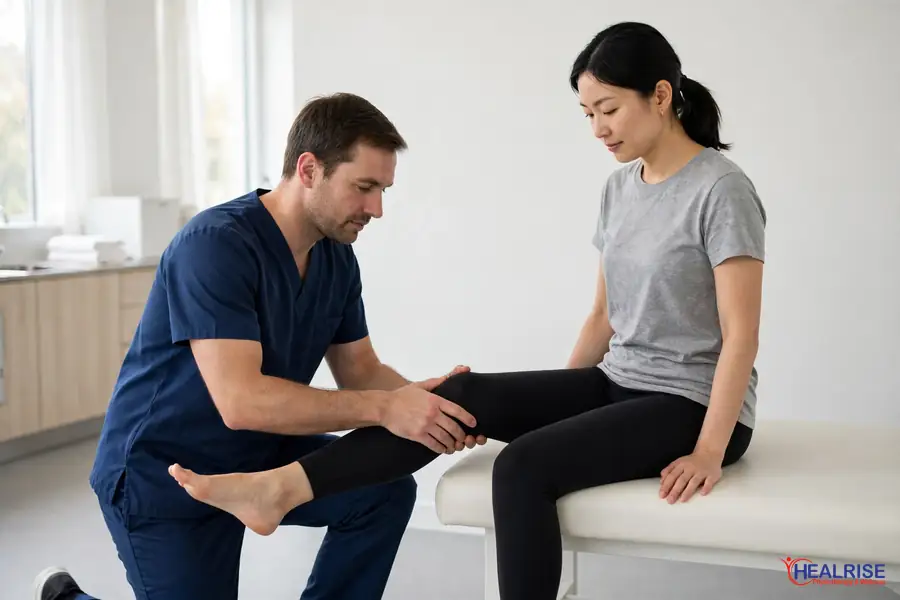
We start by talking through what happened, when the pain started, what makes it worse, and what you need your knee to do. Work, sport, family, and daily activities all shape the plan. Then we examine the knee: swelling, tenderness along the joint line, how far it bends and straightens, and how strong the surrounding muscles are. We also watch you walk, squat, and balance, because how you move tells us as much as the knee itself.
By the end of the visit, you will know what we think is causing your pain, what the plan looks like, and what you can do at home that week. A meniscus tear physiotherapy Morinville assessment usually takes about 45 minutes. You will leave with a clear set of exercises and honest advice about what to avoid for now.
You do not need a doctor’s referral to book physiotherapy in Alberta. Most extended health plans cover physiotherapy, and we provide receipts for your claim. If imaging is needed, such as an MRI, we will tell you and help you discuss it with your doctor.
7 Steps of Meniscus Tear Physiotherapy at Healrise
This is the recovery path we follow for meniscus tear physiotherapy Morinville patients at Healrise. Every plan is personal, but the steps are the same.
Step 1: Calm the knee down
In the first days, the goal is to settle pain and swelling. We use gentle movement, ice advice, and activity changes. Complete rest is rarely needed. Short, comfortable walks and gentle bending keep the knee from stiffening up.
Step 2: Restore full movement
We work on getting your knee bending and straightening fully again. Hands-on treatment and guided exercises help, and we never force a stiff knee. Full movement is the foundation for everything that follows.
Step 3: Wake up the quadriceps
After a knee injury, the thigh muscle at the front of the leg often switches off. This is called quadriceps inhibition, and it makes the knee feel weak and unstable. Simple activation exercises, like tightening the thigh muscle with the leg straight, switch it back on.
Step 4: Build strength step by step
Once the knee moves well and the quadriceps is working, we add progressive strengthening. Straight-leg raises, bridges, sit-to-stands, and step-ups build the muscles that protect the meniscus. Load increases slowly, guided by how your knee responds the next day.
Step 5: Retrain balance and control
Single-leg balance, controlled squats, and slow direction changes teach the knee to stay steady. This step matters most for people returning to sport or to work on uneven ground.
Step 6: Return to your activity
We rebuild the specific demands of your life. That might mean climbing stairs at work without pain, kneeling in the garden, or skating and cutting on the ice. We test the knee under those demands before clearing you.
Step 7: Keep the knee strong for good
Recovery does not end when the pain stops. A short home program, done two or three times a week, keeps the knee strong and lowers the chance of another tear. We review it with you and adjust it as your life changes.
Exercises That Help a Torn Meniscus
Exercise is the core of meniscus tear physiotherapy Morinville care. The right exercises depend on your stage of recovery, so never copy a program from the internet without an assessment. Here is how a program usually progresses.
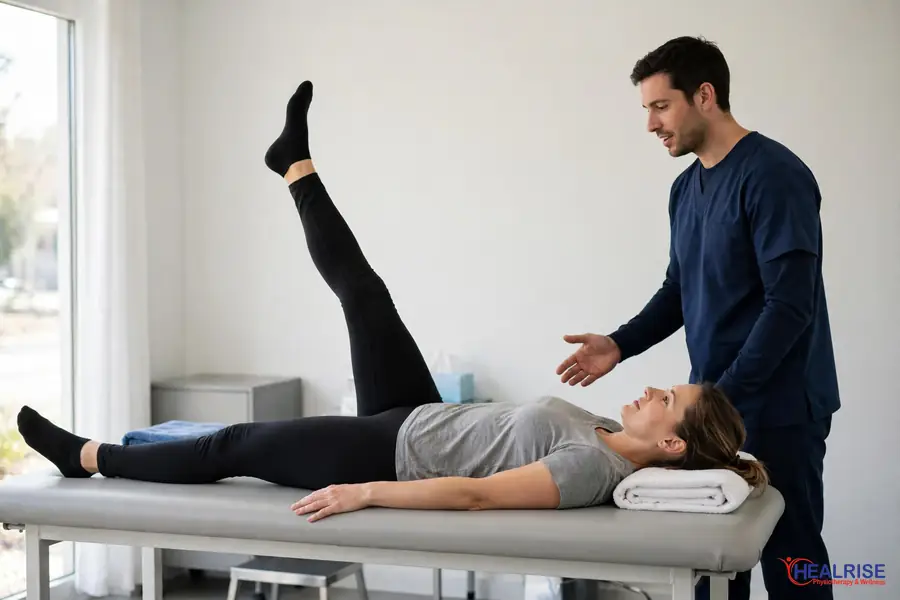
Early stage: calm and activate
- Quadriceps sets: tighten the thigh muscle, hold for 5 seconds, relax. Repeat 10 times, 3 times a day.
- Straight-leg raises: lift the straight leg a few inches off the bed or floor, hold, and lower slowly.
- Heel slides: slide your heel toward you to gently bend the knee, then slide it back.
- Ankle pumps: move the foot up and down to help with swelling.
Middle stage: build strength
- Bridges: lift your hips while squeezing your glutes, hold, and lower slowly.
- Sit-to-stands: rise from a chair without using your hands, keeping the movement slow and controlled.
- Step-ups: step onto a low step with the injured leg, then step down slowly.
- Calf raises: rise onto your toes and lower slowly, holding a counter for balance.
Later stage: balance and control
- Single-leg balance: stand on the injured leg for 30 seconds, then switch.
- Controlled mini-squats: bend the knees a short distance, keeping the knees tracking over the toes.
- Side steps with a resistance band: strengthen the hip muscles that steady the knee.
- Slow direction changes: practise turning and stepping in different directions at walking pace.
Pain during exercise should stay mild, no more than a 3 out of 10, and it should settle within a day. Sharp pain, swelling that lasts more than a day, or locking means the exercise needs adjusting. Tell your physiotherapist, and do not push through it.
Do You Need Surgery for a Meniscus Tear?
Many meniscus tears heal without surgery. For most people, meniscus tear physiotherapy Morinville treatment is the first step, not surgery. Meniscus tear physiotherapy Morinville care and activity changes are the first choice for most people, especially for degenerative tears and for tears without locking. Research and clinical experience both show that many people do as well with physiotherapy as with surgery, particularly when there is no mechanical locking.
Surgery may be worth discussing with your doctor if:
- The knee locks and will not straighten
- A large flap of cartilage keeps catching
- Pain and swelling do not improve after several weeks of good physiotherapy
- You are a young athlete with a large traumatic tear that could be repaired
There are two main operations. A meniscus repair stitches the torn cartilage back together, which preserves the meniscus but needs a slower recovery. A partial meniscectomy trims away the damaged piece, which often allows a faster return to activity but removes some cushioning.
If you do have surgery, physiotherapy afterwards is essential. Our post-surgery physiotherapy in Morinville guide covers what rehabilitation looks like after a knee operation. For people who go on to need a full knee replacement later in life, our knee replacement rehabilitation in Morinville page explains that path too.
How Long Does Recovery Take?
Recovery time depends on the tear, your age, and how consistent you are with the plan. Meniscus tear physiotherapy Morinville recovery usually follows a similar pattern, though the timeline is personal. As a rough guide:
- Mild tears with physiotherapy: many people feel much better in 4 to 6 weeks, with full recovery in 2 to 3 months.
- Larger traumatic tears: 3 to 6 months of steady rehabilitation is common, especially for a return to sport.
- Degenerative tears: pain and function often improve in 6 to 12 weeks, though the knee may always need ongoing strength work.
- After meniscus repair surgery: 4 to 6 months before a full return to sport.
- After partial meniscectomy: often 4 to 8 weeks before a return to normal activity.
Can You Still Play Sports?
In most cases, yes, but not straight away. Returning too soon is the most common reason a meniscus tear flares up again.
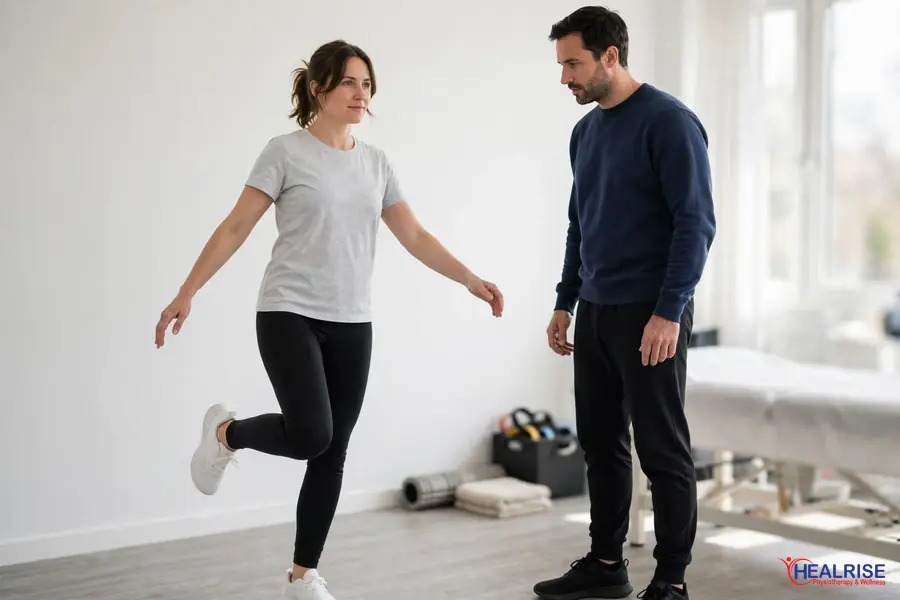
Hockey players need to be comfortable with sharp turns and sudden stops. Soccer players need to trust the knee when planting and kicking. Skiers need strength for long, controlled descents. Each sport has its own demands, and a meniscus tear physiotherapy Morinville return-to-sport plan should match them.
If you play sport in Morinville, our sports injury physiotherapy in Morinville page explains how we prepare athletes for a safe return.
7 Everyday Tips to Protect Your Knee
Small habits protect the meniscus while it heals and after recovery. These habits support your meniscus tear physiotherapy Morinville recovery and protect the knee afterwards:
- Avoid deep squats and twisting for now. Squat only to a comfortable depth, and turn with your feet instead of twisting on a planted knee.
- Keep the thigh muscles strong. A few minutes of strengthening, two or three times a week, is the best long-term protection you have.
- Wear supportive footwear. Good shoes with a firm heel and proper grip help on icy sidewalks and uneven ground.
- Warm up before sport. Five to ten minutes of easy movement, leg swings, and gentle squats prepare the knee for harder work.
- Mind your weight. Extra body weight adds load to the meniscus with every step. Even a small, steady change helps the knee.
- Use ice after a flare-up. Fifteen minutes of ice, with a cloth between the ice and the skin, settles swelling after a hard day.
- Listen to the next day. If the knee is more swollen or painful the morning after an activity, that activity was too much. Scale it back and build up more slowly.
When to Book an Appointment
Book an assessment if your knee pain has lasted more than a few days, if swelling keeps coming back, if the knee clicks, catches, or locks, or if you cannot bend or straighten it fully. The earlier you start, the faster the recovery usually is.
Seek urgent medical care if the knee is locked and will not move, if it is severely swollen or visibly deformed, if you cannot put weight on it, or if you have numbness, major weakness, or fever with redness around the joint.
Meniscus tear physiotherapy Morinville residents can access at Healrise starts with a full assessment and a plan built around your life. You do not need a referral, and we will be honest with you about what physiotherapy can do and when a doctor’s opinion is needed.
Frequently Asked Questions
Can a meniscus tear heal without surgery?
Yes, many meniscus tears improve with physiotherapy, activity changes, and strengthening. Meniscus tear physiotherapy Morinville programs focus on strength and movement rather than on the tear itself. Healing depends on the tear’s location, its size, your age, and how the knee responds to rehabilitation. Tears on the outer edge, where blood flow is better, have the best chance of healing.
How do I know if my knee pain is a meniscus tear?
Pain along the inner or outer joint line, swelling, clicking or catching, and pain when twisting or squatting point toward the meniscus. A meniscus tear physiotherapy Morinville assessment combines your history with movement and strength testing to narrow it down.
How long does meniscus tear physiotherapy take?
Most people notice real improvement within 4 to 6 weeks. Full recovery usually takes 2 to 3 months for mild tears and 3 to 6 months for larger tears or a return to sport. Meniscus tear physiotherapy Morinville care works best when you do your home exercises between visits. Consistency with your home exercises matters more than anything else.
Can I walk with a torn meniscus?
Most people can walk with a torn meniscus, though pain, swelling, or limping may limit how far. Short, comfortable walks are usually helpful. Avoid long walks or uneven ground until the knee settles.
Should I rest completely after a meniscus tear?
Complete rest is rarely needed. Relative rest is better: avoid the movements that aggravate the knee and keep moving gently. Too much rest weakens the muscles and stiffens the joint.
Does a meniscus tear always need an MRI?
No. Many meniscus tears are diagnosed and treated based on the history and a physical assessment. An MRI is useful when the knee locks, when there was major trauma, when symptoms do not improve with physiotherapy, or when surgery is being considered.
Disclaimer
This article is for general information only and is not medical advice. Every knee is different, and the right treatment depends on your own assessment. If you are unsure about your knee, book an appointment with a physiotherapist or speak with your doctor before starting any exercise program.
Book Your Assessment
Meniscus tear physiotherapy Morinville patients trust is available at Healrise Physiotherapy and Wellness. Book an assessment today and take the first step toward a knee you can rely on again. Call us or book online, and we will get you moving.